
August 25, 2026
A cybersecurity decision that starts with a blast-radius slide : depth, breadth, duration, and a warning that the environment grew faster than the program : usually fails at the first unowned domain, not at the first metaphor. A slide is a risk vocabulary. It is not the brief. If you do not write what is changing, who owns identity, endpoints, email, data, detection, and governance, which constraints cannot move, and what evidence a later reviewer will accept, the next product still controls the outcome.
That is why the live cybersecurity advisory page starts with the decision : business risks, requirements, ownership, and constraints : not a product list. This note does not replace that page. It is a supporting reminder that an expanding-attack-surface briefing is a screening input, not a cybersecurity decision.

What the public briefing is actually about
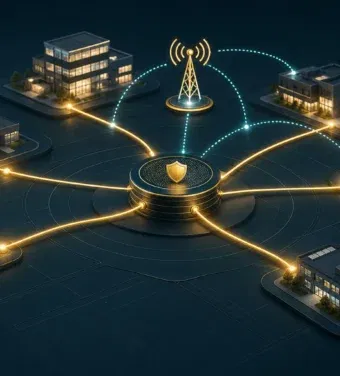
A Telarus Tuesday HITT recap, dated July 9, 2026, records a mid-market conversation that borrows "blast radius" from physics: damage does not stay at the first entry point. Presenters break the idea into three parts. Depth is how far a stolen credential or a first foothold can travel. Breadth is how many systems get touched. Duration is how long an uninvited presence can remain before anyone notices : they cite average dwell time of more than two hundred days as an industry figure, not as anyone's measured environment. They argue that AI tools, extra cloud instances, edge devices, and unmanaged SaaS expand exposure faster than many security programs can see it.
The same briefing cites Voice of the CISO 2025 / Proofpoint figures: fifty-eight percent of security leaders said they felt unprepared to respond to an attack, and seventy-six percent believed an attack in the next twelve months was likely. It also walks three familiar patterns without turning them into a design: an AI assistant deployed without a data-handling policy, business units adopting SaaS that IT never inventoried, and operational devices sitting on the same flat network as corporate systems. Treat those figures and patterns as an industry calendar, not as a finished security program. Do not import partner process notes, supplier SKUs, incentive talk, or "request an intro" language onto a public buyer page. It is not a Data Partner engagement, not a win story, and not a recommendation of any provider named on that call.
What to add to the cybersecurity brief
Before anyone treats a blast-radius diagram as a shortlist, fill these rows:
- Decision identity: what is changing, why now, who owns the outcome, and which renewals, audits, or insurance reviews matter : not a fear headline.
- Domain coverage: identity and privileged access, endpoints and collaboration, email, data protection, detection and response, security operations, governance, and third-party access.
- Visibility, not a data dump: where everyday working files and process rules live, who can reach them, and which classes of information must never go into an uncontrolled tool. Do not put logs, credentials, diagrams, or customer records in a first form.
- Constraints: owners, budget, change windows, systems that cannot stop, legal or insurance review, and information that needs a controlled exchange.
- Comparison criteria: required capabilities versus preferences, evidence that would validate a claim, and the same scoring frame for every option.
The page on what a useful cybersecurity assessment should inventory is the companion when the next step is a high-level register. The cybersecurity provider assessment is the companion when that register has to become a first conversation. Neither is a substitute for writing the decision and the owners.

Questions that belong in the first meeting
Ask the incumbent or a challenger to show, not describe:
- When they last mapped employee and machine access to data and tools, including AI and cloud applications a business unit adopted without IT.
- If one credential were compromised today, what is the furthest point they believe an attacker could reach before detection : and which owner they named for that answer.
- If the environment looks different than it did eighteen months ago, how the security program kept pace, in writing, not as a slide title.
- How they keep the same criteria across bids so a monitoring add-on is not compared to an operating model.
If those answers are a blast-radius graphic and a promised tooling week, you do not have a cybersecurity decision. You have a metaphor.

What this post is not
This is not a supplier reprint, not a threat-intel recap, and not a claim that The Data Partner already measured anyone's dwell time after a Tuesday call. Skip incentive talk, skip branded self-assessments as a substitute for owners, and skip any suggestion that a physics metaphor replaces a requirements brief. Use the live cybersecurity advisory page, write the decision and the domains, then request the next conversation.